Blog
How to Make Quiche Lorraine at Home Easily

The Blind Bake Process
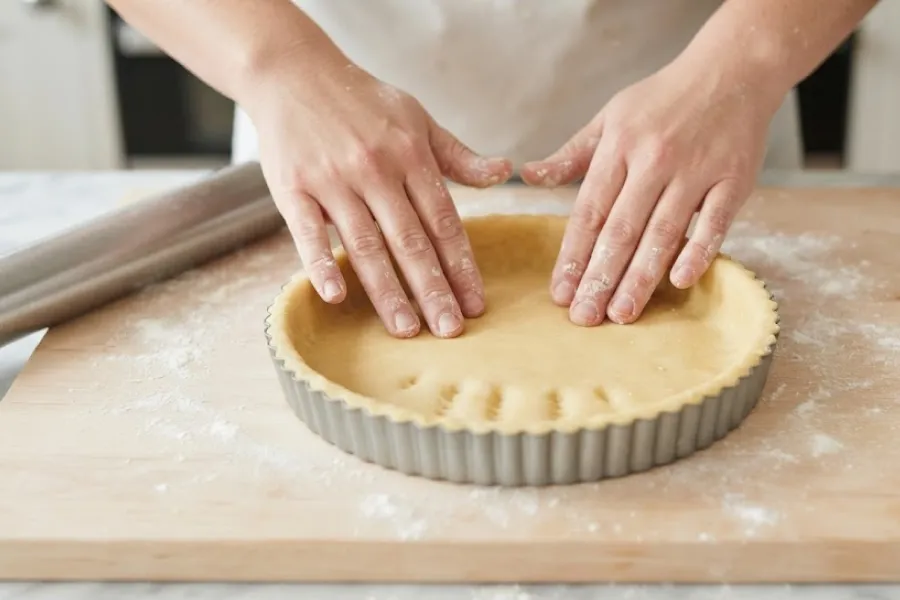
Skipping the blind bake is never a shortcut. If you pour that wet filling into raw dough, the bottom turns into a sad, soggy sponge instead of a crisp shell. The dough needs to bake under parchment paper and heavy baking beans until it turns golden and holds its shape.
Managing Butter Temperature in Dough
Warm hands are the enemy of good pastry. If your raw pastry dough feels greasy and warm against your fingers while you roll it, the butter is melting. Your crust will stay flat in the oven. Put the dough back in the fridge immediately to firm up.
Choosing the Right Fat
A common frustration with homemade pastry is dough that shrinks drastically or leaks grease into the pan. This usually happens when the butter has too much water content. We use Calin butter for our pastry because its consistent moisture-to-fat ratio ensures the fat stays trapped between the flour layers. That specific balance creates air pockets during baking, giving you a crust that shatters perfectly under a fork rather than melting into a dense puddle.

Cooking the Bacon and Onions
Every Quiche Lorraine recipe includes a step for rendering meat and onions. Do not pour the bacon with all its pan grease into the crust once the meat turns golden. That mistake makes the dish greasy and leaves an ugly orange slick floating on top. Keep the excess fat in the pan and only scoop out the solid pieces.
Cooling Before Mixing
Tossing hot meat and onions straight from the pan into your egg bowl scrambles the eggs before they hit the oven. That completely ruins the smooth texture. Let the onions and meat cool down on a plate first. Fold them gently into the egg and cream mixture to keep the liquid silky.
Helpful Kitchen Tools
You do not need expensive gadgets to bake a great tart. A few basic tools make the work much easier. A heavy wooden rolling pin helps you flatten the dough without pressing down too hard. A large metal bowl keeps the pastry ingredients cold during prep. Touching the ingredients less gives you a flakier result.
The Loose-Bottom Tart Tin
Pulling a baked tart out of a standard pie dish often breaks the delicate crust. A loose-bottom tin lets you drop the outer ring easily once the food cools down. Rest the tin on top of a heavy glass and let the metal ring fall away.
Signs Your Dough is Failing
Cooking rarely goes perfectly according to plan. Sometimes the dough tears right down the middle during rolling. That happens from a lack of ice water or from overworking the flour. Patch the torn pieces together with firm finger pressure. You never need to crumple it up and start over.
Shrinking Crusts
Watching the dough slide down the sides of the pan during the blind bake is incredibly frustrating. This means the flour did not get enough time to rest in the fridge. Always chill the lined tart tin for twenty minutes before placing it in the hot oven.
Bacon Flavor Tricks
Bacon plays a massive role in mastering how to make Quiche Lorraine properly. Cutting the meat into massive chunks leaves it rubbery to chew. Smaller strips render their fat faster and turn perfectly crisp. A quiet sizzle in the pan tells you the heat is just right.
Adding Garlic to the Pan
Traditional methods skip garlic entirely. Sautéing a smashed garlic clove with the onions in a little butter multiplies the savory smell of the food. Turn off the stove once the onions turn soft and lose their sharp scent.
Preventing a Cracked Surface
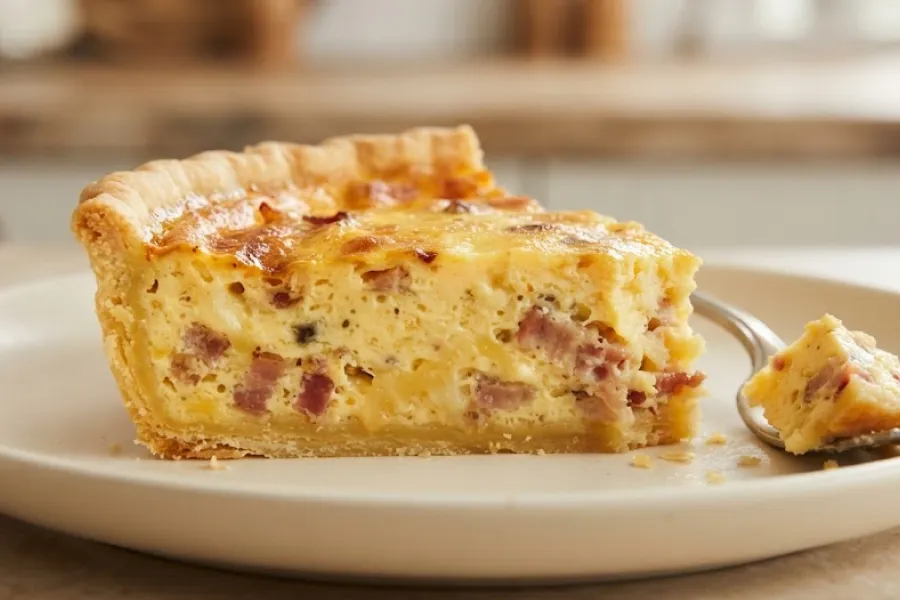
Sometimes a giant crack forms across the top of the custard after the food cools down. That happens if the oven was too hot or the pan stayed in the heat too long. The surface of the filling should remain smooth and flat.
Gradual Cooling Technique
Turn off the heat and leave the oven door slightly ajar once the center has the right wobble. Give the tart ten minutes to adjust to the temperature drop slowly. Avoiding a sudden thermal shock keeps the top looking beautiful.
Tips for Perfect Quiche Lorraine
Mastering How to make Quiche Lorraine comes down to a few hands-on habits that prevent common baking failures.
- Watch the wobble: Give the pan a gentle nudge to know exactly when to pull it from the oven. The outer edges should be puffed and solid, but the center must still jiggle slightly like set jelly. Leaving the dish in the heat until the dead center looks completely stiff leaves you with a bouncy, rubbery filling instead of soft cream.
- Create a cheese seal: Scatter a handful of grated cheese directly onto the baked pastry before pouring in the wet custard. This melted layer acts like a waterproof coat. It stops the heavy liquid from soaking into your crust, saving you from a sad and soggy bottom.
- Respect the resting time: Slicing a piping hot tart straight from the oven turns the soft filling into a mushy mess under your knife. Let the food sit and cool to room temperature before cutting. The savory flavors become much richer, and the custard holds together for a perfectly clean slice.
You can buy and see different types of cheese in Calin webstie by clicking on buy cheese.
Slicing and Serving Temperature
Many folks swear this dish must be served piping hot from the oven. It actually tastes richer and cuts much cleaner if you let it sit and cool to room temperature. A hot tart turns to mush under a knife. Let the custard rest to get a clean, appetizing slice.