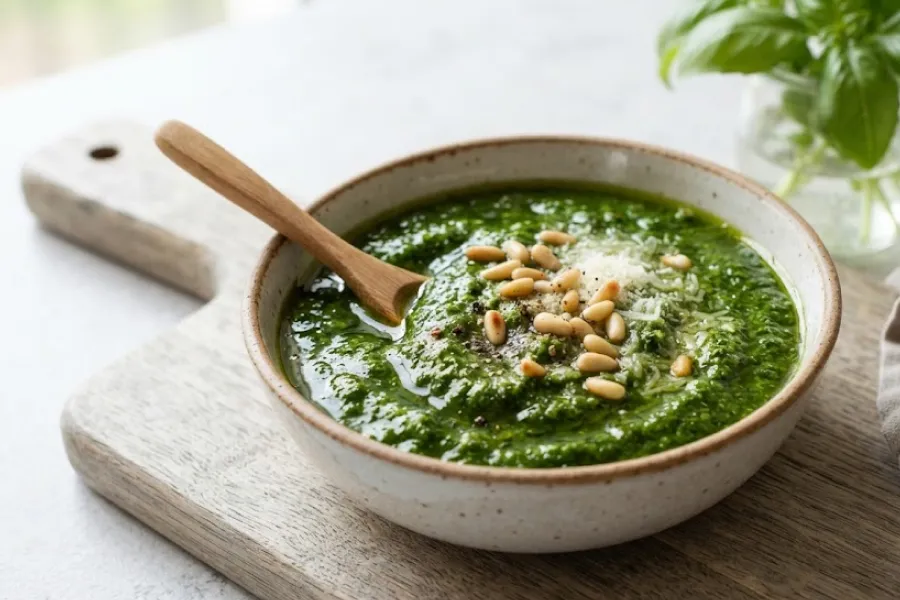
Taste your olive oil right now. If a raw sip leaves a sharp peppery burn in the back of your throat, your sauce is ruined before you even start. Real pesto does not need the aggressive force of heavy appliances. That smooth green paste comes from treating fresh ingredients gently. Crushing fragile basil leaves under hot, fast blades replaces the sweet garden flavor with a harsh bitterness. You want your kitchen smelling like toasted pine nuts and fresh garlic, not warm metal and oxidized herbs. Mastering the right techniques for how to make pesto sauce guarantees these simple ingredients will transform into a bright, flawless masterpiece.
Classic Ingredients for Pesto Sauce
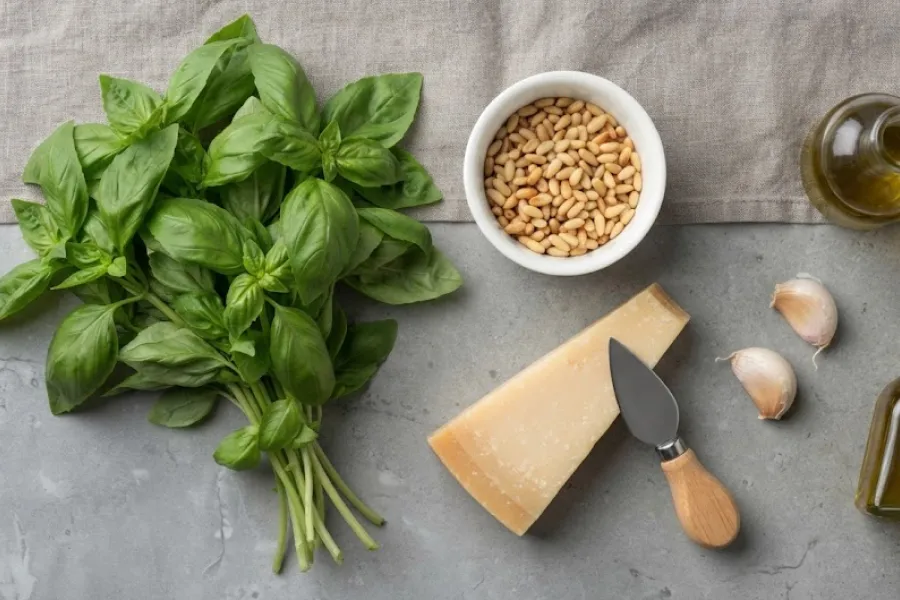
The base relies on a few simple items. Fresh basil must smell sweet and have soft leaves. Thick, woody stems feel like splinters in your mouth. Pick only the tender leaves so the final texture stays perfectly smooth. Using fresh components is the only reliable way to get a pesto sauce recipe right on the first try.
The Right Basil Variety
Not all basil works for this recipe. Sweet Genovese basil provides that classic Italian aroma with a soft, peppery background. Thai basil looks similar but carries a strong licorice flavor that completely clashes with cheese and olive oil. Sniff the bunch before you buy it. The smell should remind you of sweet cloves and fresh grass.
You can buy cheese from Calin.
Washing and Drying the Leaves
Moisture is the enemy of a smooth paste. Wash your basil gently in cold water to remove the field dirt. Put the leaves in a salad spinner and dry them thoroughly. If you skip this step, the excess water prevents the oil from clinging to the leaves, leaving you with a watery soup instead of a rich sauce.
Cheese and Rich Nuts
For a buttery thickness, you need pine nuts and dry cheese. Toast the pine nuts over low heat until they release a warm, rich scent and turn pale gold. Dark brown nuts make the paste taste heavy and dirty. Parmesan must be very dry and crumbly, smelling faintly of salt and aged milk. Wet, soft cheeses turn your mixture into a sticky paste.
Garlic and Olive Oil
One small garlic clove does the job. Old, giant cloves carry a strong sulfur smell that completely hides the basil. Always split the garlic down the middle. Throw away any green sprouted germ you find inside. The extra virgin olive oil needs a mild finish. If your oil is extremely spicy, mix it with a neutral option like grapeseed oil to stop the sauce from getting bitter.
How to Make Pesto Sauce Step by Step
Starting with cold tools changes everything. Put your food processor bowl and blade in the freezer for fifteen minutes. Cold metal stops the delicate basil from heating up, keeping the leaves bright green. This step is one of the best pesto sauce tips you can use in your own kitchen. Prepping your gear properly sets up the entire cooking process for success.
Prepping the Garlic First
Drop your peeled garlic clove onto a cutting board. Sprinkle a heavy pinch of coarse salt right over it. Drag the flat side of your knife over the garlic and salt, mashing them together into a rough paste. The salt breaks down the garlic fibers instantly. This simple trick prevents large, spicy chunks of raw garlic from hiding in your final sauce.
Toasting Pine Nuts Properly
Place your pine nuts in a dry skillet over medium heat. Stand right there and watch them. They go from pale gold to burnt black in about twenty seconds. Shake the pan constantly so they toast evenly on all sides. Pour them onto a cool plate the second you smell that rich, buttery aroma.
Blending Dry Items and Garlic
Leave the toasted pine nuts on a plate until they cool down completely. Throwing hot nuts into the bowl cooks the raw garlic and basil instantly, killing the fresh bite in a second. Pulse the cold pine nuts, the garlic paste, and a pinch of salt until finely chopped. Add the basil leaves and pulse again in short bursts. We are chopping the ingredients into tiny pieces, not liquidizing them.
Adding Oil and Cheese
This step separates a glossy sauce from a broken mess. Pouring olive oil into a food processor running at high speed ruins the oil, making it intensely bitter. Your bright green mix will turn milky and opaque. For a quick pesto sauce that tastes amazing, scrape the chopped greens into a normal bowl. Gently fold in the olive oil by hand using a wooden spoon. Stir in the grated parmesan last.
You can also buy breakfast cheese from Calin.
Traditional Mortar Versus Electric Processor
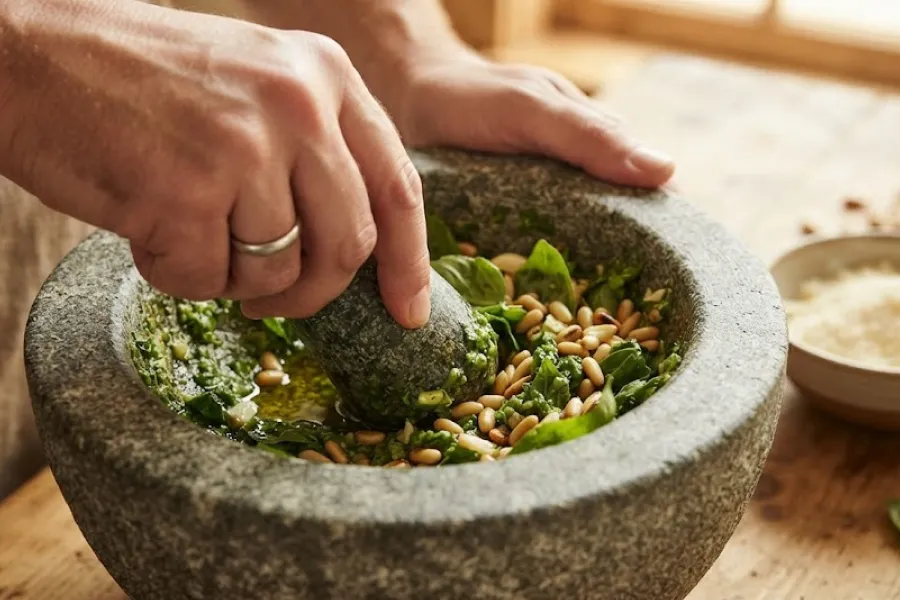
Electric tools save time, but a heavy stone mortar builds a better flavor. Pounding the basil slowly extracts the oils without generating any destructive heat. This gentle, traditional approach is the ultimate secret to unlocking the deepest, most authentic flavors in a rich homemade pesto sauce. Basil crushed in a mortar smells entirely different from basil spun in a machine. If you do use a processor, stick strictly to the pulse button with clear pauses between each spin.
Picking the Right Mixing Bowl
Plastic bowls hold onto old smells and trap grease against the sides. A cold glass or stainless steel bowl is a much better choice. Steel holds the chill from the fridge and prevents the herbs from warming up. Cleaning stainless steel takes half the time, too.
Checking the Texture Mid-Process
You might notice warning signs while mixing. Catching these signs early saves the food before it hits the plate. If water separates and pools at the bottom, the basil leaves were too wet.
Signs of a Ruined Batch
- A milky, opaque color instead of a glossy, deep green finish
- A harsh sulfur smell overtaking the fresh garlic aroma
- A sticky, gummy texture rather than a loose, oily paste
- A sharp, peppery burn in the back of the throat
Fixing a Thick Paste
Do not just dump more oil into a stiff batch. When you are ready to eat, stir two spoonfuls of hot pasta water into the sauce. The starch in the hot water softens the paste and helps it grip the noodles beautifully.
Best Uses for Pesto Sauce
Pasta is the classic choice. This green paste does much more than coat spaghetti, though. The smell of fresh basil and garlic hitting warm food wakes up your appetite instantly.
Breakfast Eggs and Pizza Nights
Spoon this over a fried egg in the morning. The rich yolk mixed with the herbal basil and salty parmesan tastes incredible. Smear a thick layer over homemade pizza dough and watch the oven fill your kitchen with the smell of summer. Pizza can easily turn into a soggy mess if your cheese releases too much water into the pesto. We specifically designed Calin pizza cheese with a highly controlled moisture-to-fat ratio. It melts evenly without weeping water, keeping your pesto layer rich and the crust perfectly crisp.

Roasted Meats and Vegetables
Grilled chicken breast often dries out on the stove. Spreading a thick spoonful of sauce over the hot meat adds moisture and flavor right away. Toss hot roasted potatoes in a large bowl with a few scoops of the green paste. The dry, floury surface of the potato absorbs the oil perfectly. Mastering how to make pesto sauce gives you endless ways to upgrade plain roasted vegetables.
How to Store and Freeze Pesto
Storing this paste requires a little attention. Basil hates air and turns dark brown quickly when exposed to oxygen. Open air strips away the fresh garden taste completely.
Keeping It Fresh in the Fridge
Spoon the paste into a clean glass jar. Use the back of a spoon to pack it down flat, pushing out any trapped air bubbles. Pour a thin layer of olive oil right over the top to act as a seal against the air. Following good how to store pesto sauce habits keeps the batch tasting fresh for three days in the fridge.
Freezing for the Winter
Freezing is the best way to save summer flavors. Spoon the mix into ice cube trays and put them in the freezer. Pop the solid cubes out and drop them into a zip-top bag. Never add lemon juice before freezing. The acid slowly eats away at the green color, leaving you with an ugly, muddy brown paste when you thaw it. Only squeeze lemon over the food right before you eat.
The Final Taste Comes Down to Your Hands
After you take the time to chop the basil and toast the nuts carefully, the cheese dictates the final texture. Sometimes a batch turns sandy on the pasta and loses its flavor quickly. This happens when dry, cheap cheese fails to melt into the olive oil. High-quality parmesan melts straight into the oil when you stir it by hand, leaving a soft, velvety finish on the plate.
We are so glad you spent time at the stove with us today. Your next bowl of pasta is ready for that fresh basil aroma, and now that you understand how to make pesto sauce, you just need to roll up your sleeves and get cooking.
Also read: Sausage Cheese Dip Recipe
Frequently Asked Questions
Yes, raw cashews are your best choice for mimicking that soft texture. Almonds and walnuts work well too. Just soak walnuts in hot water briefly to remove the bitter taste from their skins.
It lasts three to four days in a sealed glass jar. You must pack the surface down flat and pour a thin layer of olive oil over the top to block out the air.
Several things cause bitterness. Hot blender blades can burn the leaves, mixing extra virgin olive oil at high speeds destroys the oil, or you might have started with an overly spicy oil.