


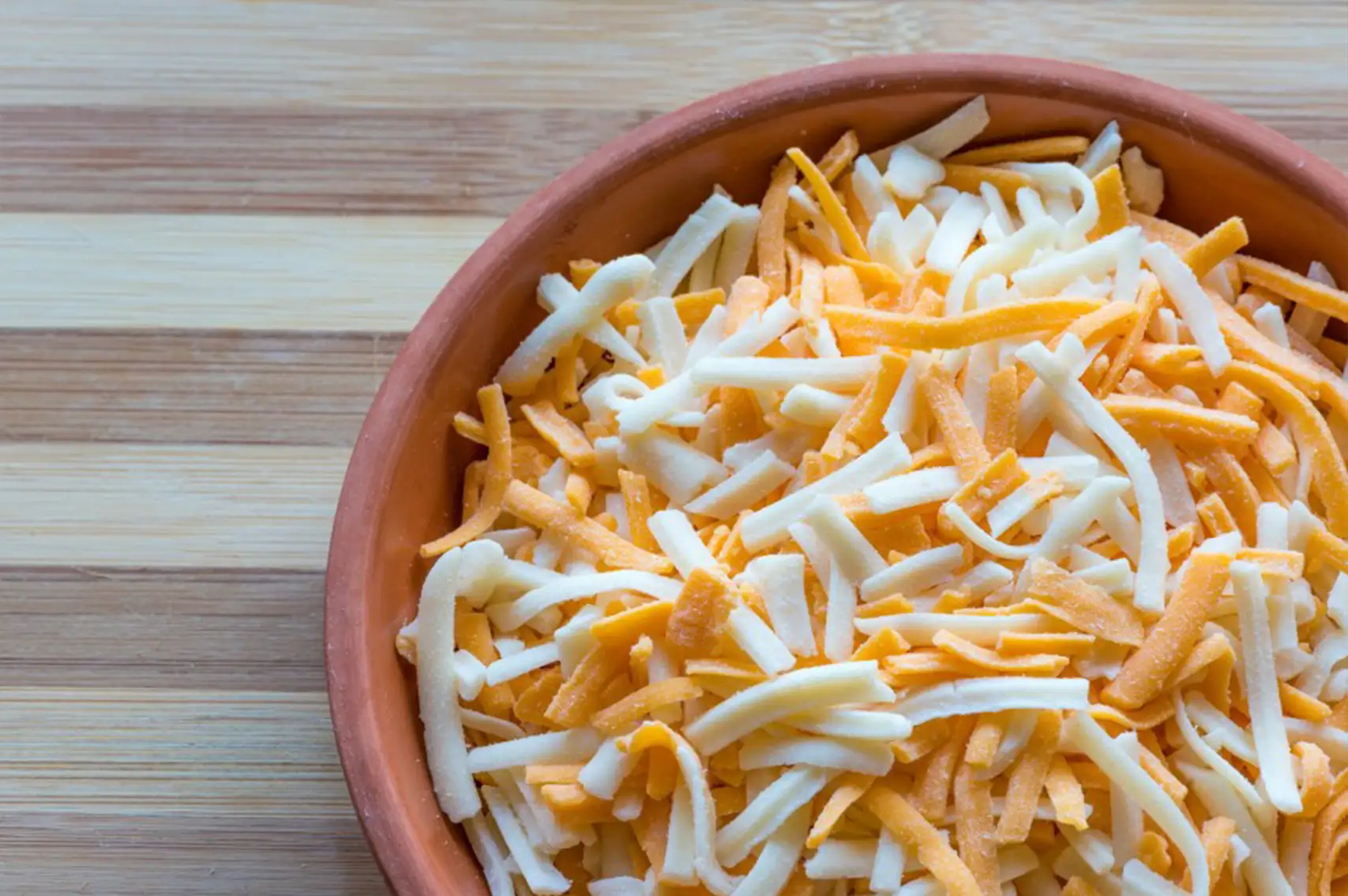
Pizza cheese is a delicious type of cheese that melts, stretches, and browns on top of your favorite pizza. But what makes pizza cheese stretchy? While many people immediately think of mozzarella, “pizza cheese” isn’t just one thing; it’s a category of cheese products engineered to deliver optimal melt, stretch, flavor, and browning when baked on pizza.
At its core, pizza cheese is made from milk, typically cow’s milk, that has been processed into a cheese with the right moisture, fat content, and protein structure to behave beautifully in high heat. The most common version globally is mozzarella, especially low-moisture mozzarella, but blends including provolone, cheddar, and other cheese types are also widely used.
Pizza cheese is more than just melted dairy; it’s the result of carefully balanced ingredients and cheese-making science. From the traditional pasta filata methods that give mozzarella its famed stretch to processed blends engineered for consistency and cost, pizza cheese is designed to deliver the perfect melt, texture, and flavor on every slice.
If you’re curious about what is pizza cheese made of and making your own at home or choosing between cheese blends, understanding how pizza cheese works and the pizza cheese manufacturing process will help you take your next pizza from good to unforgettable.
Click here to buy the highest quality mozzarella cheese.
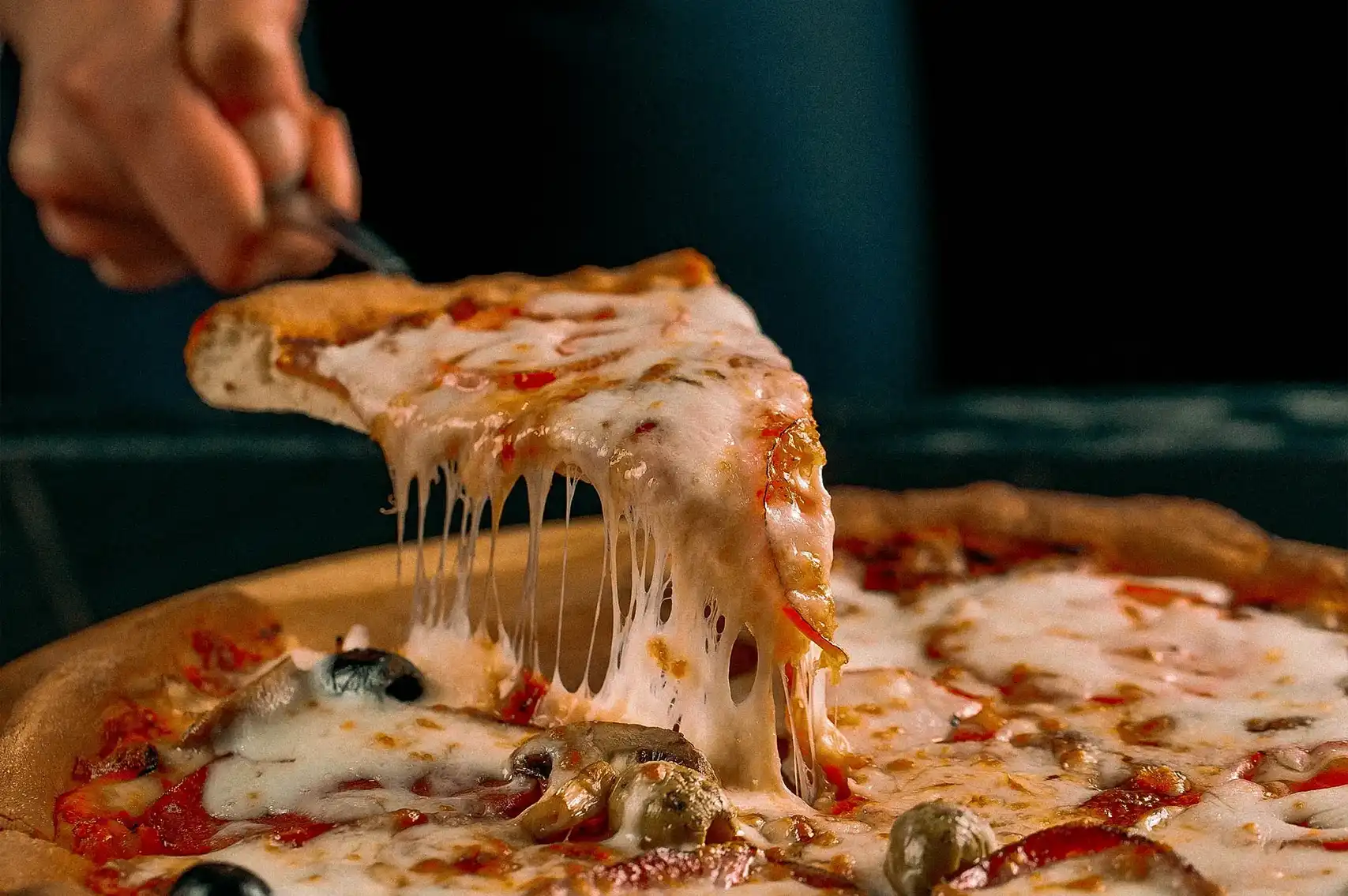
Common Ingredients in Pizza Cheese
Whether you’re talking about natural pizza cheeses like mozzarella or processed pizza cheese blends, the ingredient list falls into two broad categories:
Natural Cheese Ingredients
Natural pizza cheeses are made through traditional cheesemaking and usually include:
- Milk: Most often, cow’s milk, sometimes buffalo milk for specialty mozzarella, is used as the primary ingredient.
- Starter Cultures: These friendly bacteria ferment the milk sugars to produce lactic acid, which helps develop flavor and texture.
- Rennet: A natural enzyme (or microbial alternative) that causes milk to coagulate, separating curds from whey.
- Salt: Added for flavor and texture, and also helps control moisture and microbial growth.
Click to buy Fresh Mozzarella now
In natural pizza cheeses like mozzarella and provolone, these simple ingredients combine through careful chemistry to create a cheese that tastes great and melts beautifully.
Processed Pizza Cheese Ingredients
Some pizza cheeses, especially those used in frozen pizzas or industrial settings, are processed. These often include:
- One or more natural cheeses (e.g., mozzarella, provolone) as a base.
- Emulsifying salts (like sodium phosphate, citrate, and tartrate) to improve meltability and consistency.
- Milk solids or whey powders to boost protein and help texture.
- Vegetable oils or fats in some analogue or imitation pizza cheeses.
- Remnants and additives such as preservatives, stabilizers, and anti-caking agents (especially in pre-shredded pizza cheese).
Processed pizza cheeses may still contain a high percentage of cheese, but they often add non-cheese ingredients to improve shelf life, consistency, and melting characteristics.

The Process of Making Pizza Cheese
The general process for traditional pizza cheeses like mozzarella includes these steps:
- Milk Preparation: Fresh milk is warmed, and starter cultures plus rennet are added.
- Curd Formation: The milk coagulates into curds, separating from liquid whey.
- Cutting & Heating: The curds are cut to help expel whey and heated to firm up.
- Pasta Filata (Stretching): For mozzarella and similar cheeses, curds are heated in hot water or whey and stretched repeatedly, a process known as pasta filata, to align proteins and give the cheese its characteristic texture.
- Shaping & Cooling: The stretched cheese is shaped into blocks or balls and then cooled and packaged.
This stretching and kneading under heat organizes the protein strands in the cheese, resulting in a smooth texture and great melting properties.
Industrial Pizza Cheese Production
In larger dairy factories, the process may be mechanized with:
- Steam melters and stretchers that automate the pasta filata process.
- Mixing and molding lines that blend multiple cheese types.
- Controlled cooling and packaging systems to ensure consistent quality and safety.
Processed pizza cheese can be made without full pasta filata but will use emulsifiers and blending techniques to achieve similar melt and stretch characteristics.
Click to buy Flavored Mozzarella
What Makes Pizza Cheese So Stretchy
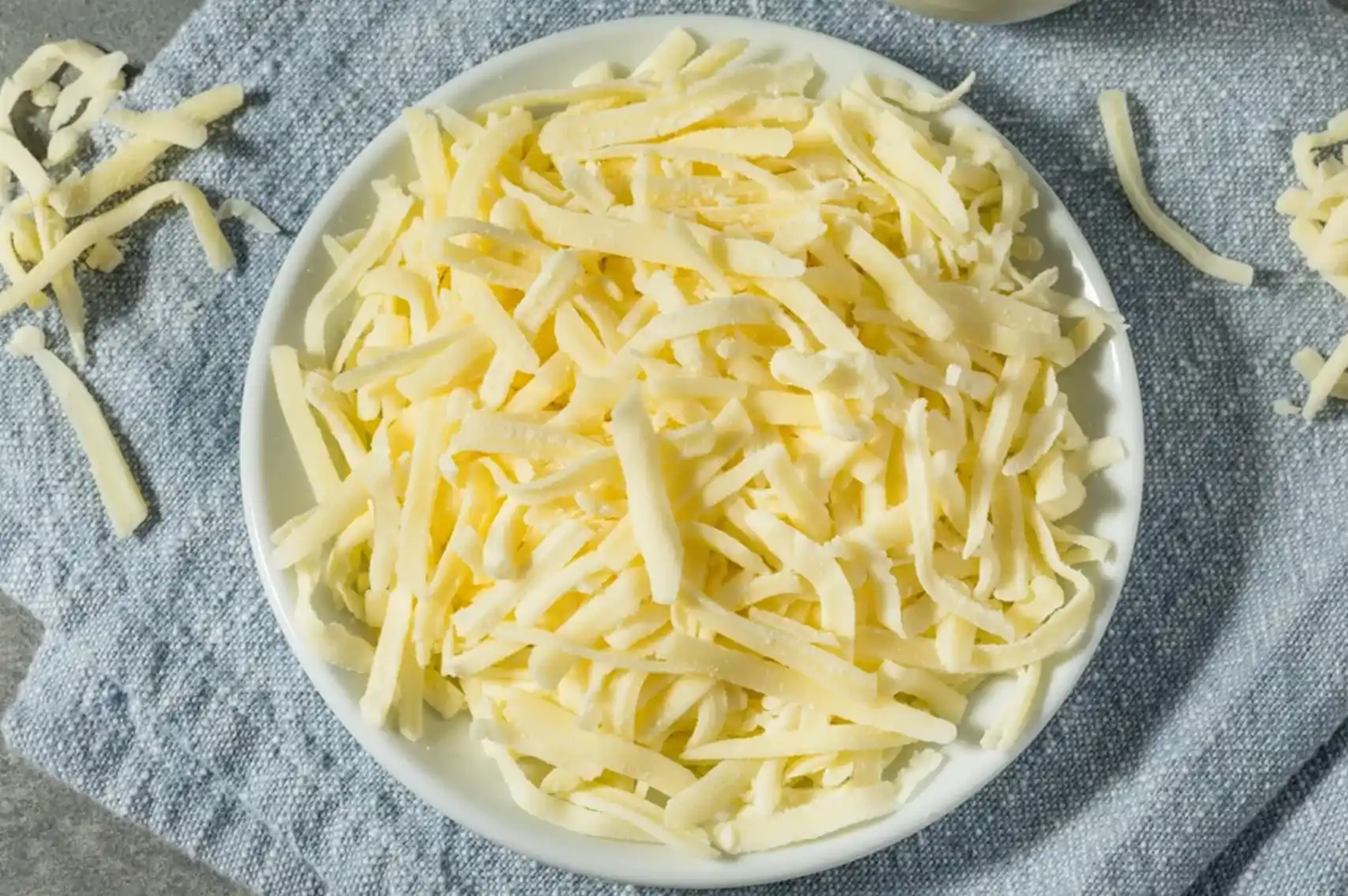
The iconic cheese pull of a hot pizza comes from the protein structure in the cheese, especially in mozzarella and similar pasta filata cheeses:
Protein Alignment
During the stretching step of pasta filata, the casein proteins (the main milk proteins) are aligned in long strands. This alignment acts almost like tiny rubber bands in the cheese, giving it elasticity when heated and pulled.
Moisture and Fat Content
- Moisture: A higher water content helps cheese melt more fluidly.
- Fat: Fat lubricates the protein strands and contributes to smooth melt and stretch.
Mozzarella cheeses, especially low-moisture types used in pizzerias, balance moisture and fat for optimal stretch without becoming too runny or greasy.
Casein Behavior
In a typical cheese, casein proteins form a network held together by calcium bridges. When heated, this network relaxes, and if proteins are aligned (as in pasta filata cheeses), they will stretch before breaking, giving that classic stringy texture.
Processed vs Natural Pizza Cheese
But which one is better?
Natural Pizza Cheese
- Made primarily from milk with starter cultures and rennet.
- Example: traditional and low-moisture mozzarella, provolone.
- Strong, authentic flavor and stretchy texture from the pasta filata process.
- Moisture and fat content can vary, but usually stay true to dairy cheese standards.
Processed Pizza Cheese
- Contains cheese plus emulsifiers, stabilizers, and other ingredients for consistency.
- Often used in frozen pizzas or economical blends.
- May melt very evenly and be cost-efficient, but sometimes lacks depth of flavor compared to natural cheeses.
Both types have their place in pizza making, depending on cost, style, and desired texture in the final pizza.
FAQs About Pizza Cheese
For traditional pizza cheeses, whole cow’s milk is most common, offering the best balance of fat and protein for melt and flavor. Specialty buffalo milk is also used for high-end mozzarella, especially in Italian pizzas.
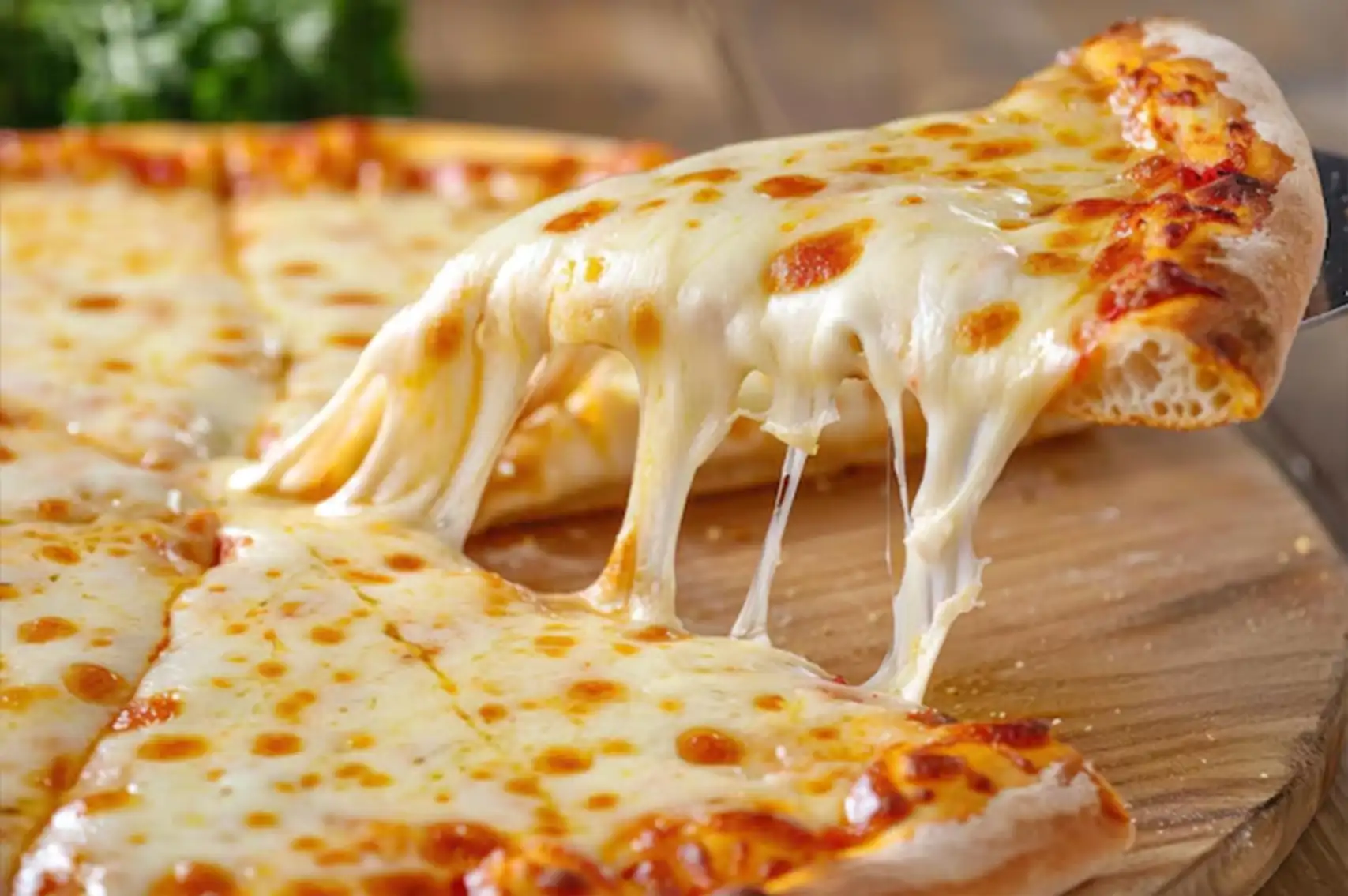
Pizza cheese gets its stretch mainly from the protein structure formed during the pasta filata process. Stretching aligns casein proteins into strands that stretch when heated. Moisture and fat help lubricate these strands for that classic pull.
Yes! You can make pizza cheese at home by making mozzarella using milk, cultures, rennet, and salt. The key is the pasta filata process, heating and stretching the curd, though it takes practice and careful temperature control.